Project details

Client:
Ahmed Abdelhack
Tool:
Figma, Miro, Balsamiq, Google Doc, Google Sheet, Google Meet
Mothabir - Web app that helps BAC students revise smarter, not harder
🧠 The problem
BAC students rely on scattered resources (YouTube, PDFs, Facebook groups), which makes revision inconsistent, unstructured, and demotivating, especially close to exams.
As a result:
Students don’t know what to revise next
Progress feels invisible
Motivation drops quickly
🎯 Goal
Design a web app learning experience that helps students:
Practice efficiently
Track their progress
Stay motivated during BAC preparation
👤 My role
Product Designer (end-to-end)
I owned research, UX decisions, flows, wireframes, and prototyping, working closely with the PM to define an MVP.
What I learned about users
Through surveys and discussions with BAC students, a few patterns became clear:
Revision is done in short bursts, not long sessions
Students prefer videos + practice, not theory alone
Progress is mostly emotional (“Do I feel ready?”), not measurable
Motivation drops when effort doesn’t feel rewarded
“I study a lot, but I don’t know if I’m improving.”
This became the core product insight:
Students don’t just need content, but they need confidence.
Turning insights into product decisions
1️⃣ Practice before theory
Insight
Students want to test themselves quickly before committing to long study sessions.
Decision
I prioritized practice access on the home screen, instead of hiding it behind lessons.
Tradeoff
This reduced content discovery upfront, but increased engagement and early value.
2️⃣ Visible progress to sustain motivation
Insight
Students measure progress emotionally, not academically.
Decision
I introduced:
Progress indicators
Completion states
Clear feedback after quizzes
This helped students answer a simple question:
“Am I getting better?”
3️⃣ Simplified navigation for stressed users
Insight
During exam periods, cognitive load is already high.
Decision
I reduced navigation complexity by grouping content into:
Subjects
Lessons
Practice
Each action takes 2 taps or less to reach.
What I learned about users
Through surveys and discussions with BAC students, a few patterns became clear:
Revision is done in short bursts, not long sessions
Students prefer videos + practice, not theory alone
Progress is mostly emotional (“Do I feel ready?”), not measurable
Motivation drops when effort doesn’t feel rewarded
“I study a lot, but I don’t know if I’m improving.”
This became the core product insight:
Students don’t just need content, but they need confidence.
Turning insights into product decisions
1️⃣ Practice before theory
Insight
Students want to test themselves quickly before committing to long study sessions.
Decision
I prioritized practice access on the home screen, instead of hiding it behind lessons.
Tradeoff
This reduced content discovery upfront, but increased engagement and early value.
2️⃣ Visible progress to sustain motivation
Insight
Students measure progress emotionally, not academically.
Decision
I introduced:
Progress indicators
Completion states
Clear feedback after quizzes
This helped students answer a simple question:
“Am I getting better?”
3️⃣ Simplified navigation for stressed users
Insight
During exam periods, cognitive load is already high.
Decision
I reduced navigation complexity by grouping content into:
Subjects
Lessons
Practice
Each action takes 2 taps or less to reach.
What I learned about users
Through surveys and discussions with BAC students, a few patterns became clear:
Revision is done in short bursts, not long sessions
Students prefer videos + practice, not theory alone
Progress is mostly emotional (“Do I feel ready?”), not measurable
Motivation drops when effort doesn’t feel rewarded
“I study a lot, but I don’t know if I’m improving.”
This became the core product insight:
Students don’t just need content, but they need confidence.
Turning insights into product decisions
1️⃣ Practice before theory
Insight
Students want to test themselves quickly before committing to long study sessions.
Decision
I prioritized practice access on the home screen, instead of hiding it behind lessons.
Tradeoff
This reduced content discovery upfront, but increased engagement and early value.
2️⃣ Visible progress to sustain motivation
Insight
Students measure progress emotionally, not academically.
Decision
I introduced:
Progress indicators
Completion states
Clear feedback after quizzes
This helped students answer a simple question:
“Am I getting better?”
3️⃣ Simplified navigation for stressed users
Insight
During exam periods, cognitive load is already high.
Decision
I reduced navigation complexity by grouping content into:
Subjects
Lessons
Practice
Each action takes 2 taps or less to reach.
Key flows
✍️ Practice Flow
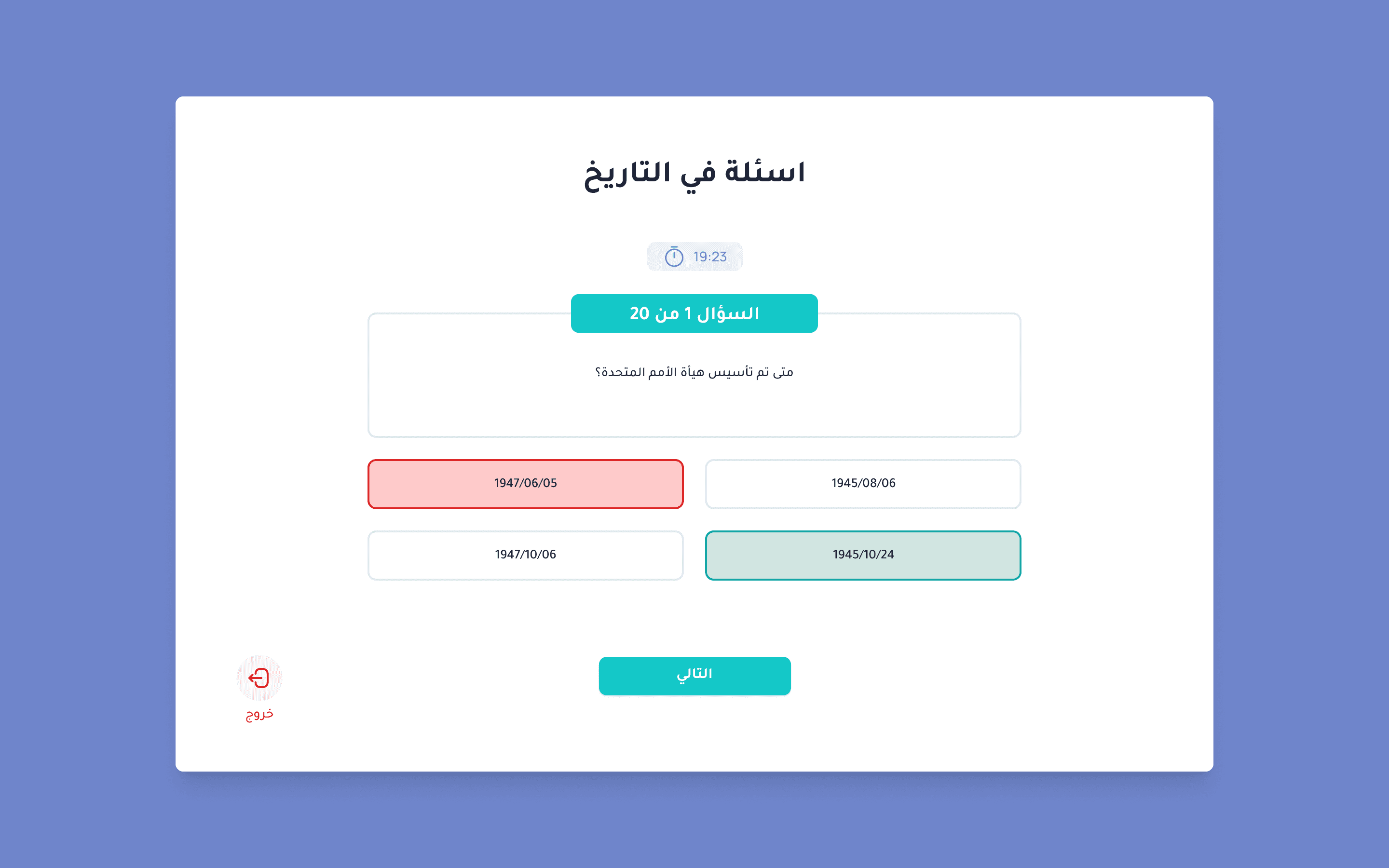
Instead of showing every screen, I focused on the most critical moment:
From opening the app → starting practice
The flow was intentionally short to remove friction and help users reach value fast.
Why this matters:
Faster time-to-practice = higher engagement and consistency.
📊 Progress & Feedback
Feedback screens were designed to:
Encourage retrying
Reduce fear of failure
Reinforce learning, not punishment
This aligns with the emotional needs discovered earlier.
Validation & feedback
I tested early prototypes with BAC students and gathered qualitative feedback.
Most students found the practice flow clear and motivating
Users appreciated seeing progress instead of just scores
Several students mentioned feeling “less lost” during revision
This validated the focus on clarity and feedback over feature quantity.
Outcome
The final design delivered:
A clearer revision structure
Faster access to practice
Stronger sense of progress and control
Mothabir shifts revision from overwhelming to manageable.
Key takeaway
Designing for students isn’t about adding more content, but it’s about reducing uncertainty.
Key flows
✍️ Practice Flow
Instead of showing every screen, I focused on the most critical moment:
From opening the app → starting practice
The flow was intentionally short to remove friction and help users reach value fast.
Why this matters:
Faster time-to-practice = higher engagement and consistency.
📊 Progress & Feedback
Feedback screens were designed to:
Encourage retrying
Reduce fear of failure
Reinforce learning, not punishment
This aligns with the emotional needs discovered earlier.
Validation & feedback
I tested early prototypes with BAC students and gathered qualitative feedback.
Most students found the practice flow clear and motivating
Users appreciated seeing progress instead of just scores
Several students mentioned feeling “less lost” during revision
This validated the focus on clarity and feedback over feature quantity.
Outcome
The final design delivered:
A clearer revision structure
Faster access to practice
Stronger sense of progress and control
Mothabir shifts revision from overwhelming to manageable.
Key takeaway
Designing for students isn’t about adding more content, but it’s about reducing uncertainty.
Key flows
✍️ Practice Flow
Instead of showing every screen, I focused on the most critical moment:
From opening the app → starting practice
The flow was intentionally short to remove friction and help users reach value fast.
Why this matters:
Faster time-to-practice = higher engagement and consistency.
📊 Progress & Feedback
Feedback screens were designed to:
Encourage retrying
Reduce fear of failure
Reinforce learning, not punishment
This aligns with the emotional needs discovered earlier.
Validation & feedback
I tested early prototypes with BAC students and gathered qualitative feedback.
Most students found the practice flow clear and motivating
Users appreciated seeing progress instead of just scores
Several students mentioned feeling “less lost” during revision
This validated the focus on clarity and feedback over feature quantity.
Outcome
The final design delivered:
A clearer revision structure
Faster access to practice
Stronger sense of progress and control
Mothabir shifts revision from overwhelming to manageable.
Key takeaway
Designing for students isn’t about adding more content, but it’s about reducing uncertainty.